← All treatments

Tibia • fibula • stability

Syndesmosis surgery

An unstable syndesmosis injury can compromise ankle congruence. Surgery aims to restore the relationship between the tibia and fibula precisely and allow ligament healing.

Key point

The choice of procedure depends on the diagnosis, alignment, tissue quality, activity level and the patient’s goals. Recovery protocols are individualised.

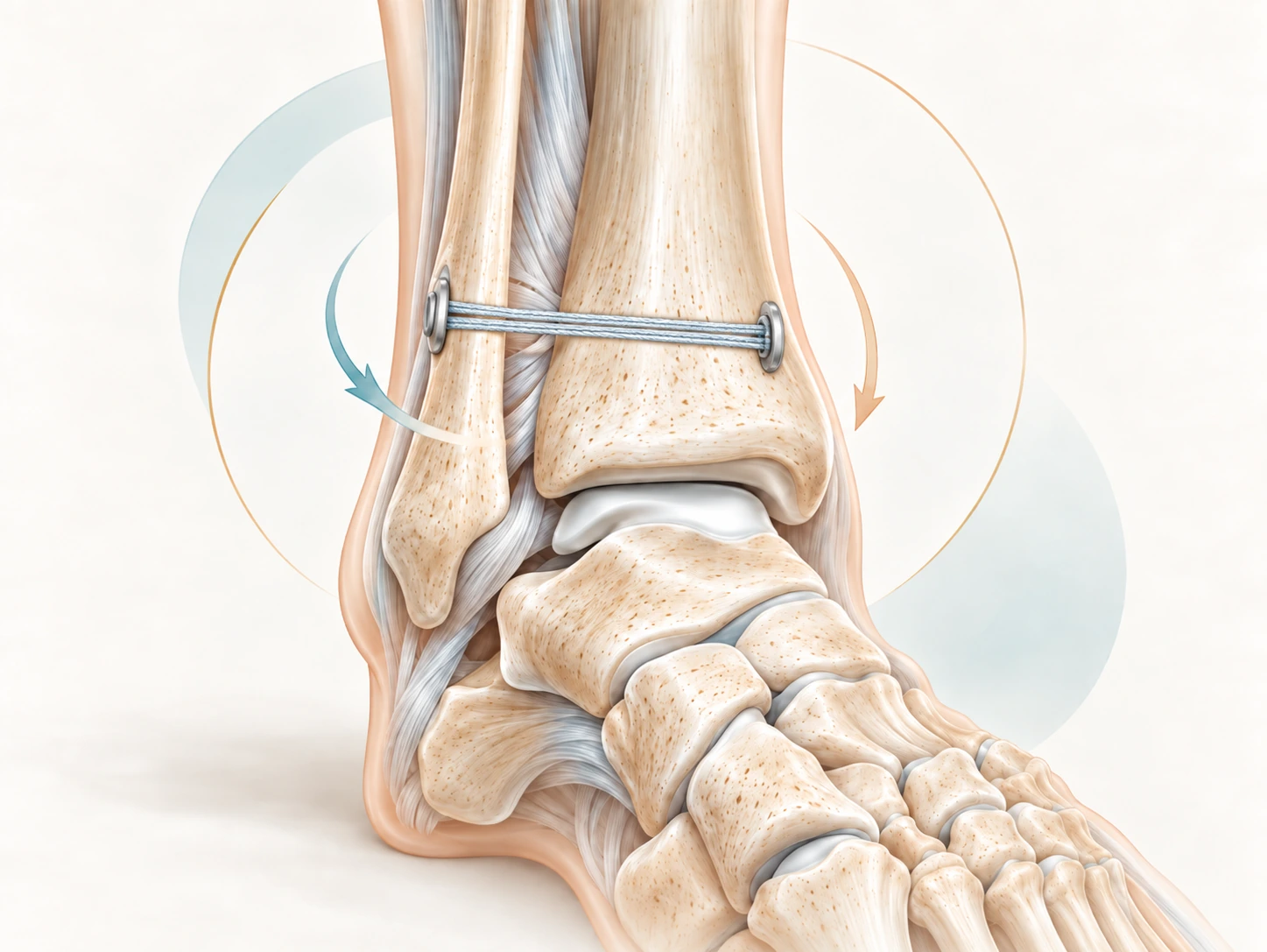
Illustrative diagram – Syndesmosis surgery
Illustration

Visualising the procedure

This illustration shows syndesmosis stabilisation between the fibula and tibia in order to restore ankle alignment and stability.

When does the syndesmosis need stabilisation?

Surgery may be required when instability, diastasis, certain associated ankle fractures or symptomatic chronic sequelae are present. The decision is based on examination, X-rays and sometimes additional imaging or intra-operative assessment.

How is stability restored?

After anatomic reduction of the syndesmosis, fixation may use screws or dynamic fixation devices depending on the injury. Arthroscopy may be added in selected cases to assess the joint and treat associated lesions.

A protocol tailored to the injury

Protection, weight-bearing and return to sport depend on the injury pattern, the presence of a fracture and the fixation method. Rehabilitation then aims to restore motion, strength, proprioception and functional control.

Why precision matters

Malreduction, persistent instability, stiffness, hardware irritation, infection or associated cartilage damage can affect the outcome. Chronic injuries sometimes require a more reconstructive strategy.

Source patient : AOFAS / FootCareMD. General information, to be adapted to each clinical situation.

Helping you move forward, step by step.

A consultation is an opportunity to discuss your situation, goals and the different treatment options.