What is the goal?
The main goal is to reduce pain by eliminating motion at the arthritic joint while correcting ankle alignment when necessary.
Advanced arthritis • stability • pain
Ankle fusion joins the tibia and talus to eliminate painful joint motion. It remains a reliable option for advanced arthritis when preserving ankle motion is not the priority or when replacement is not suitable.
The choice of procedure depends on the diagnosis, alignment, tissue quality, activity level and the patient’s goals. Recovery protocols are individualised.
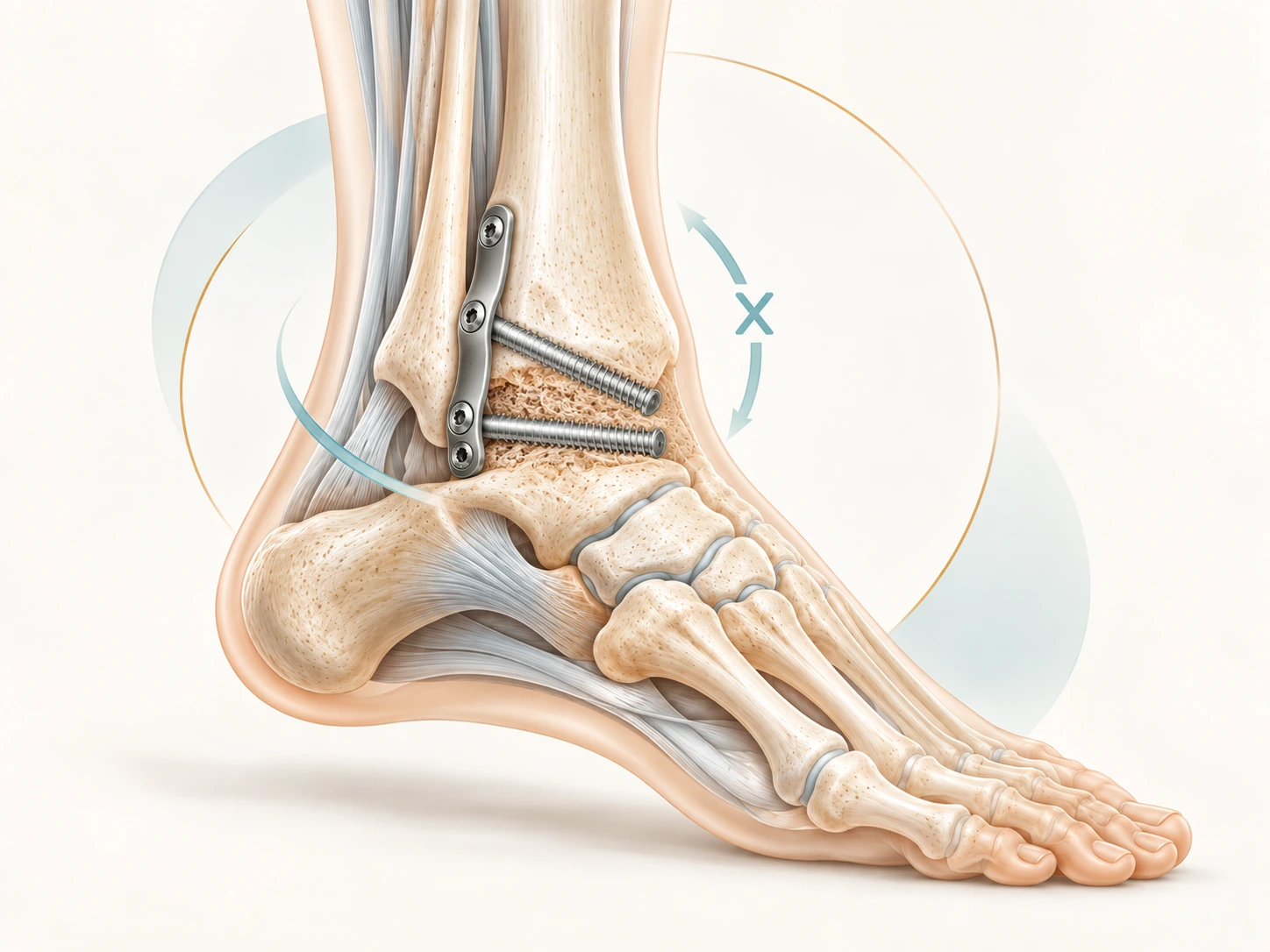
This illustration shows the principle of ankle fusion: stabilising the joint in a functional position to relieve pain from advanced arthritis.
The main goal is to reduce pain by eliminating motion at the arthritic joint while correcting ankle alignment when necessary.
Residual cartilage is removed, alignment is corrected, and the tibia and talus are fixed in a functional position using screws and/or plates. Depending on the anatomy and clinical situation, the approach may be open or arthroscopic.
Elevation, pain control and protection of the operated ankle.
Weight-bearing is gradually resumed according to X-rays and fusion progress.
Walking and activities are increased gradually; swelling may persist for several months.
Risks include nonunion, infection, wound-healing problems, hardware irritation and stiffness. The ankle loses tibiotalar motion and neighbouring joints may be placed under greater stress over time.
Source patient : AOFAS / FootCareMD. General information, to be adapted to each clinical situation.
Helping you move forward, step by step.
A consultation is an opportunity to discuss your situation, goals and the different treatment options.